 Luke Wiersma
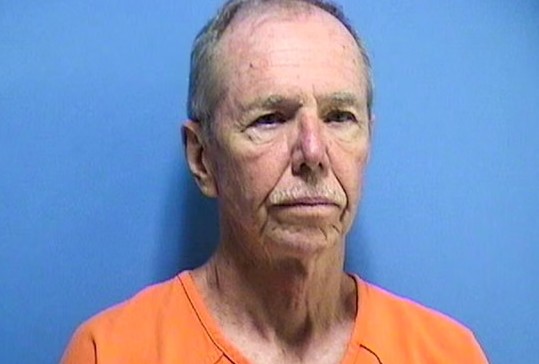 Stanley Burkhardt
In the 1970s and 1980s, he rose through the ranks of the New Orleans Police Department as a child abuse detective, helping to form what colleagues informally called a pedophile unit, a squad that was supposed to hunt down those who preyed on kids. Newspapers praised his work. Colleagues treated him as an expert. Parents in terrorized neighborhoods were told they could trust him with their most vulnerable children.
Behind that badge, though, was a secret life built on the same cruelty he was sworn to stop.
The double life of a child abuse detective
On paper, Burkhardt’s job was simple: investigate the rape and sexual exploitation of children, build cases against abusers, and stand with the smallest victims in court. He moved through living rooms, bedrooms, hospital rooms, and interview spaces where terrified children tried to explain the unexplainable. Adults deferred to his authority. Judges trusted his reports. Juries listened carefully when he took the stand.
For a long time, the story ended there. He was the expert. The cop in the crisp shirt and tie. The one who showed up when a child’s world detonated.
In 1987, the mask slipped.
Federal agents intercepted packages he had mailed that contained images of boys being sexually abused. The detective who had sold himself as a crusader against child exploitation was suddenly exposed as a man trafficking in the same material he pretended to fight. He was convicted in federal court of mailing child sexual abuse material and sent to prison, leaving the force in disgrace.
Prison did not end it. After his release, investigators later discovered that he had again been receiving images of children being molested. He eventually admitted that, too, and on top of his exploitation image crimes he pleaded guilty to sexually abusing a nine year old girl related to him by marriage. The girl, as an adult, described a childhood cleaved into two halves, before and after the abuse, and how that bright, ordinary childhood was swallowed by shame and fear.
By then, prosecutors and psychologists were starting to see a pattern that ordinary sentencing could not contain. This was not a man who had made a single catastrophic mistake. This was a pattern offender, a man whose crimes did not stop when the badge came off, a man whose appetite for children continued even after prison and public exposure.
A sexually dangerous offender
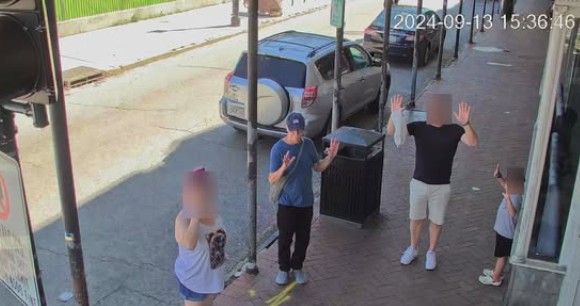 Burkhardt Interacting With Children In The French Quarter
Photo Credit: Project NOLA
In the 2000s and 2010s, federal authorities used a rarely invoked law that allows the government to keep certain offenders locked up indefinitely if they are found to be sexually dangerous. Psychologists evaluated Burkhardt, reviewed his history, and listened as victims told their stories. The picture that emerged was not of a former detective who lost his way, but of a predator who had used the power of a badge as a hunting license.
In 2011, a federal judge ruled that Burkhardt met the legal definition of a sexually dangerous person and ordered him committed to a special federal prison in Butner, North Carolina, reserved for offenders considered an ongoing risk to the public. In that proceeding, experts documented not just his criminal record, but his own admissions that during his policing career he had molested children while he was supposed to be investigating crimes against them.
Years of court ordered treatment followed. Eventually, another federal judge agreed to a conditional release plan. Under tightly controlled conditions, Burkhardt would be allowed out from behind the razor wire, cycling between federal custody and halfway houses. He was ordered to follow strict rules about internet use, contact with minors, employment, and reporting to authorities. On paper, it looked like a carefully built cage made of supervision and conditions.
It did not take long for him to test its bars.
The internet trail: “boyz4me”
In 2019, Louisiana State Police discovered that Burkhardt had created email and social media accounts without informing his supervisors, a direct violation of his release terms as a registered sex offender. Investigators said he used those accounts to leave suggestive comments on photos of young men and boys on a picture sharing site. The password to one account, they reported, was “boyz4me!”, and the usernames and email addresses he contacted included phrases that made his intentions chillingly clear.
Troopers also found sexual images of teenage minors and partially clothed younger boys on his phone, further violations of his conditions. When he applied for a job at a New Orleans casino, he allegedly altered his driver’s license to remove the mark that identified him as a convicted sex offender, another calculated effort to hide the truth from anyone who might ask a few basic questions.
Those violations sent him back into federal custody. Even after another round of treatment and another conditional release to a halfway house in New Orleans in 2024, he was arrested yet again in 2025, accused of improper use of social media as a sex offender and failing to provide required information to authorities. Each violation told the same story. Given the slightest opportunity, he pushed the limits, tried to get close to images of youth, tried to hide who he was.
Prosecutors did not mince words. They argued to judges that he was exactly the type of repeat predator these laws were designed for.
The victims he left behind
The most important part of Burkhardt’s story is not his job titles or his court dates. It is the people whose lives he shattered.
The nine year old girl
One of the victims whose abuse he formally admitted to was a nine year old girl within his extended family. Adults around her trusted the respected detective. He used that trust as cover. He had a calm manner, a badge, and the practiced voice of a man who had spent years interviewing children about things they could barely say out loud. He knew exactly how far he could push and still keep her silent.
Years later, she described how her childhood split in two. On one side were the ordinary memories, school and play and family gatherings. On the other side were the nights she remembered in flashes and fragments, the feeling of being trapped by a man everyone else said was good. She grew up with a sense that the world was not safe and that the adults who claimed to protect her could be the ones who hurt her worst.
Her case is one of the few where the legal system clearly acknowledged his crimes, accepted his guilty plea, and put the weight of a criminal conviction behind her story. Many others had to fight for even that basic recognition, and some are still fighting.
The boy at Bayou St. John: Vic “V. J.” Groomer
 Vic Groomer
Photo Credit: nola.com
Another survivor, Vic “V. J.” Groomer, came forward publicly as an adult, describing how Burkhardt repeatedly raped him in the early 1970s, beginning when he was about eight years old. Vic’s parents managed an apartment complex near Bayou St. John, and officers from the New Orleans Police Department sometimes lived there as part of an informal arrangement. One of those officers was Burkhardt.
The grooming began the way it often does. It looked like attention. It looked like special treatment. Vic was invited to play with Burkhardt’s nephews. He was allowed into the apartment. Over time, the nephews were no longer there, and the visits were no longer about play.
Vic has said that Burkhardt used guns and photographs as tools of terror. He described the officer pointing a firearm at him and at himself, pulling the trigger on an empty chamber, spinning violence and death into a sick game. He described being shown pictures of dead children, a grotesque gallery meant to communicate a simple message: talk and this could be you. For a small boy who had been taught to respect the police, the message was devastatingly effective.
As an adult, Vic gave a statement to police and spoke publicly about what was done to him. He called Burkhardt “a dangerous, dangerous person” and insisted that the man should never again be free. He spoke directly to other survivors, telling them that what was done to them does not belong to them, that the shame rests on the abuser and the institutions that protected him, not on the child who was trapped in his orbit. His voice joined a chorus of survivors who refused to let Burkhardt’s crimes remain buried in sealed files and quiet settlements.
The boy he was supposed to protect: Richard Windmann
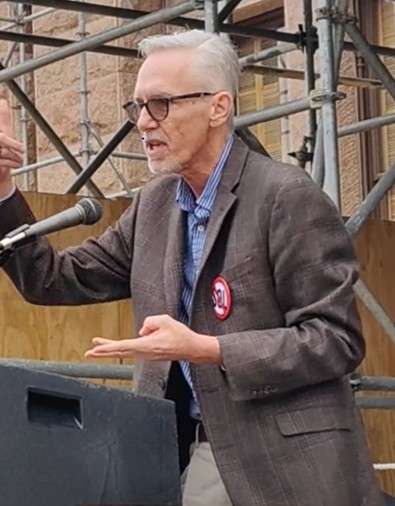 Richard Windmann
Photo Credit: Austin American-Statesman
Another victim is a boy who, as a teenager in the mid 1970s, had already survived horrific abuse by leaders of a New Orleans Boy Scout troop. That boy is Richard Gerard Windmann.
Richard’s troop, and the men who ran it, eventually became part of the public record, their crimes exposed in court and in documentaries. As a boy, Richard had already been passed from predator to predator in institutions that were supposed to protect him, including the Boy Scouts and the Catholic Church. When he testified in court about those Scout leaders, he was doing what adults had asked him to do. He was brave. He was honest. He believed that telling the truth would finally bring safety.
Instead, he was handed to another predator.
Because of his role as a witness in the Scout case, New Orleans police introduced Richard to Detective Stanley Burkhardt. The officer was presented as a protector, an expert on child sex crimes, the man who would help keep Richard safe and bring more abusers to justice. This was the detective parents were told they could trust with their children. This was the man the courts viewed as an authority on child sexual abuse.
Based on Richard’s sworn testimony and the later findings of a federal court, the opposite happened. Burkhardt used that relationship to begin molesting Richard. The meetings that were supposed to be about legal strategy and safety became opportunities for abuse. The detective who should have been Richard’s shield became yet another predator, and this time the predator carried a badge, a gun, and the full power of the state.
In the 2011 federal case over whether Burkhardt should be civilly committed as a sexually dangerous person, a federal judge explicitly found that the testimony of Richard Windmann was credible and that Burkhardt’s denial of the abuse was not. The court concluded, by clear and convincing evidence, that Burkhardt had sexually abused Richard repeatedly over a period of years. In a system that so often questions survivors, that finding mattered. A federal judge, after hearing both sides, said plainly that he believed the survivor and not the former detective.
Richard carried that truth through decades of silence, shame, and anger. He left New Orleans and built a life. Eventually, when the weight of what had been done to him could not remain hidden any longer, he came forward. He publicly named his abuser. He spoke to reporters. He filed suit against both Burkhardt and the City of New Orleans. He exposed how a supposedly elite child abuse detective could use his badge and his specialized role to get access to children and then hurt them.
Richard has called Burkhardt a monster and has argued that each time the system releases him, it injures the children he attacked all over again. Every halfway house that takes him in, every conditional release order, every news story about him living once more in a neighborhood forces the child inside those survivors to relive what happened.
Richard’s advocacy did not stop with his own case. He became a co-founder and president of Survivors of Childhood Sex Abuse, standing with other survivors from New Orleans, from the Boy Scouts, from the Catholic Church, and far beyond. In that role, he has insisted that Burkhardt’s name be remembered not as a hero detective, but as a confessed child molester and a federally adjudicated sexually dangerous person who weaponized his badge against children like him, and whose guilt in Richard’s case was affirmed by a federal judge who found his testimony credible.
The shadow over dead teenagers
Burkhardt’s victims are not limited to those whose abuse led to formal charges or clear judicial findings. There are also teenagers whose deaths hang over his story like a storm cloud.
One of them was seventeen year old Edward “Eddie” Wells, a boy who spent years being sexually exploited in the French Quarter. His body was pulled from the Mississippi River in 1982. At the time, Burkhardt was one of the detectives involved in the case, publicly insisting that Wells had been murdered because of his dangerous lifestyle, even as official findings left critical questions unresolved.
Decades later, after men like Richard Windmann and Vic Groomer went public, cold case investigators reopened the Wells case and several other deaths of teenagers tied to the French Quarter, taking a new look at whether Burkhardt himself might be implicated in ways that had been overlooked or ignored. Ultimately, state police said that he was not considered a murder suspect in those cases, and he has never been charged with homicide. He has denied killing anyone. Still, the fact that his name is entwined with these deaths deepens the horror of his history. A child abuse detective whose presence in any case involving young victims can no longer be separated from the possibility that he was exploiting or terrorizing vulnerable youth even as he filled out his reports.
Institutions that looked away
Burkhardt’s story is also a story about institutional failure.
For years, the New Orleans Police Department held him up as a specialist on child sexual abuse. Parents trusted him. Other officers brought him victim after victim. Prosecutors built cases around his testimony. Judges cited his experience. His reputation as a defender of children became a shield that hid who he really was.
When the packages of child rape imagery were finally intercepted, the system reacted, but slowly and narrowly. He was prosecuted for the specific crimes, convicted, and sent to prison. Only later did the wider pattern begin to emerge: the abused relatives, the boys from the neighborhoods, the children from cases where he was supposed to be the protector.
Even after the sexually dangerous person finding, the response remained hesitant. There were conditional releases, halfway houses, technical violations, and jurisdictional fights over how long he could legally be held. Survivors like Richard Windmann and Vic Groomer watched him go in and out of custody. They watched neighbors learn his history only after he had already moved onto their street. They watched the man who had ruined their childhoods show up in churches, job applications, and news footage as if he were simply another ex-cop fallen on hard times.
The institutions that should have protected those children instead built careers and reputations around a predator in a badge. The damage stretches far beyond the individual victims. Every time a survivor sees that the system is still debating what to do with Burkhardt, it sends a message about whose pain matters and whose safety can be negotiated away.
A legacy written by survivors
Today, Stanley Burkhardt is again behind bars, facing state charges related to his use of social media and his obligations as a sex offender. He has entered pleas in the way defendants do, and the courts will eventually deliver their legal judgment on those new counts.
But his real legacy is not written in docket sheets or case numbers. It has already been written by the people he hurt and by the families and communities that believed his uniform made him safe.
There is the little girl who grew up knowing that the man her family had welcomed into their lives was also the man who stole her sense of safety. There is Eddie Wells, whose body was pulled from the river and whose case will always carry the shadow of the detective who claimed to be an expert on boys like him. There is Vic “V. J.” Groomer, who as a small boy endured the terror of guns, dead-child photographs, and a police officer’s threats, and who has now used his voice to reach other survivors. And there is Richard Gerard Windmann, the boy Burkhardt was supposed to protect, who was instead abused by the detective, who refused to stay silent, and whose testimony a federal judge found credible when deciding whether Burkhardt should ever be free again.
Richard and Vic, and others like them, spoke their abuser’s name in public. They forced courts and police to confront who Burkhardt really was. They tore away the last scraps of the old myth about the heroic child abuse detective. Through their advocacy and refusal to disappear, they continue to insist on a simple truth: as long as men like Stanley Burkhardt exist, the institutions that enabled them owe a duty, not to reputation or comfort, but to the next generation of children who deserve a world where the badge stands for protection, not predation.
About
About the author: Luke Wiersma is a journalist, activist and advocate for chilldhood sex abuse victims and survivors. Luke Wiersma was sexually abused by an adult from the ages of sixteen to eighteen. One of his goals is to change the laws to create harsher punishments for sex offenders, as well as protect the children of today, so that they have a have a safer place to grow up. Awareness and prevention is key in Luke's mind. He has shared his story many times by interviews, podcasts, and public speaking. You can contact Luke at [email protected].
The free reprint, distribution, dissemination, promulgation and/or sharing of this article, in its whole, by anyone, is not only allowed, but is encouraged.
Do you like this page?