 Richard Windmann, Ph.D.
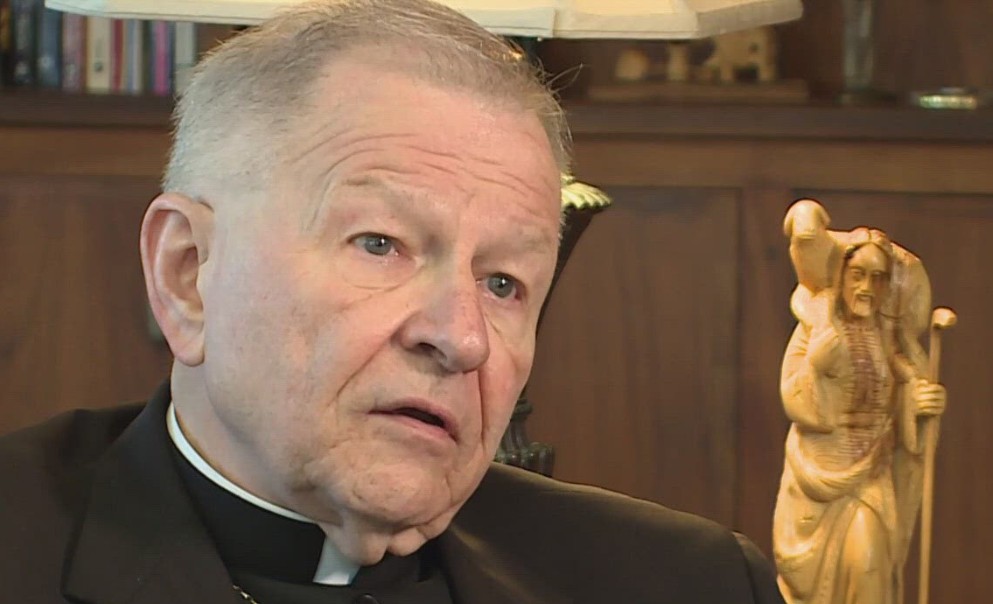 Archbishop Gregory Aymond
The Archdiocese of New Orleans walked into federal bankruptcy court this month like a rich man trying to squeeze through the eye of a needle, clutching ledgers, not rosaries, while hundreds of survivors of clergy sexual abuse watched to see if justice would finally roll down like waters, or dry up yet again in a desert of delay and secrecy.
As the ancient prophet cried,
“But let judgment run down as waters, and righteousness as a mighty stream.”
After more than five years of Chapter 11 proceedings, abuse survivors have now overwhelmingly approved a settlement plan of roughly two hundred thirty million dollars that promises compensation for hundreds of claims and other creditors. More than ninety nine percent of voting creditors, excluding bondholders, endorsed the deal.
That vote was not a vote of trust, it was a vote of exhaustion; not a hymn of praise, but a groan too deep for words.
Now, a multi week confirmation trial before U.S. Bankruptcy Judge Meredith Grabill will determine whether the plan is “fair and equitable” and whether the Archdiocese can finally emerge from the bankruptcy it chose in 2020, just as Louisiana opened a window allowing survivors to sue over decades old abuse.
In a city that knows about storms and levee breaches, another kind of flood is pressing at the gates, the flood of long buried truth. Whether the court will open those gates wide, or merely crack them enough to let money trickle out while secrets remain sealed, is the question hanging over every hearing.
A church counting coins, a people counting scars
The settlement on the table has grown over time. Earlier this year, the Archdiocese floated a smaller proposal, but pressure mounted, righteous anger rose, and the number swelled into the hundreds of millions.
Under the current plan, the money would be cobbled together from several sources:
-
Around one hundred thirty million dollars in cash from the Archdiocese and its affiliates, committed to a settlement trust
-
Roughly seventy million dollars tied to the sale or monetization of Christopher Homes, a large church affiliated housing operation
-
Approximately thirty million dollars from insurers that have already settled, with potential additional recovery from litigation against remaining carriers
In practical terms, parishes, schools, and charities are now being marched into their own smaller bankruptcies to contribute their share of the burden, with filings already appearing on the court docket as the Archdiocese prepares to list and deploy assets for the plan.
For the institution, this is about balancing columns, reconciling accounts, satisfying bondholders and insurers. For the survivors, this is about balancing the scales of justice after what many describe as institutionalized, systematic, wholesale rape of children, followed by decades of concealment.
When the hierarchy speaks of sacrifice, it now means shuttered buildings and sold properties. When survivors speak of sacrifice, they mean the childhood stolen in rectories and classrooms, the nights they could not sleep, the years they drowned pain in bottles and pills, the marriages that broke under the weight of unspoken horror.
In the Gospels, Jesus overturns the tables of the money changers in the temple. In New Orleans, the tables are still standing, covered with spreadsheets and actuarial charts, while the abused stand outside and wait to see whether anyone will finally overturn the system that made this catastrophe possible.
A five year desert of delay
The Archdiocese filed for Chapter 11 protection in 2020. Officially, the move was framed as a way to “equitably” resolve claims and preserve the church’s mission. In reality, survivors say, it locked their search for truth and accountability inside a sealed federal process where the Archdiocese controlled the flow of information and used the automatic stay like a shield.
Five years later, survivors are still in court. Many are aging. Some have already gone to their graves, carrying their stories like unburied bones. What was billed as a path to healing has often felt like wandering in the wilderness while the church hierarchy builds legal fortresses out of tithes and insurance premiums.
Their prayer has sounded very much like the old lament,
“O LORD, how long shall I cry, and thou wilt not hear, even cry out unto thee of violence, and thou wilt not save!”
During these years, the case has also revealed how far the system will go to protect itself. In one notorious episode, Judge Grabill sanctioned attorney Richard Trahant and removed four survivors from the official creditors committee after Trahant warned a school that a chaplain had admitted to molesting children in the past. A confidential federal oversight report later concluded that the survivors should not have been punished and that it was the Archdiocese itself that confirmed details of the chaplain’s abuse to school officials.
Instead of being praised as a watchman on the wall who saw danger approaching and sounded the alarm, Trahant was hit with a staggering monetary sanction and his clients were cast out of the very committee charged with advocating for survivors. The message was clear, speak too loudly, and you will be made an example.
In Scripture, the prophets who cry out in the streets are not silenced by gag orders. In New Orleans, the court did the opposite, and it did so in a case about child rape and secrecy, as if to say that decorum in the temple matters more than the blood of the innocents crying from the ground.
Survivors have sat through hearing after hearing, listening to lawyers debate privilege and confidentiality, to experts talk about “risk exposure” and “settlement value.” To them, this is not a seminar in corporate restructuring; it is a long, grinding passion play where the crucified are told to be patient while the high priests confer in back rooms.
Confirmation trial: judgment at the gate
The confirmation trial now under way in Judge Grabill’s courtroom is the final earthly gate the plan must pass before the Archdiocese can emerge from bankruptcy and begin paying claims. The court will hear testimony from experts on valuation and feasibility, from Archdiocesan officials who defend the deal, and potentially from survivors who argue it still falls short.
At issue is not only how much is paid, but how much truth is told.
The plan includes requirements for child protection protocols, improved reporting to law enforcement, outside oversight, and a survivors’ bill of rights. It also calls for the creation of an archive of documents that would expose the history of abusive priests and deacons, and the leadership’s response, records that have long been hidden behind sacristy doors and sealed agreements.
Survivors insist that money without light is not justice. They want the names, the files, the timelines, the patterns, who knew, who moved offenders from parish to parish, who silenced complaints, who treated children’s bodies as collateral damage to be settled quietly decades later.
A settlement that leaves the truth half buried is like whitewashing tombs, clean on the outside, full of death within. To pour millions of dollars into a fund while leaving archives locked and euphemisms unchallenged would be nothing less than a golden calf, a shiny object raised up to distract from the God of truth and mercy.
As the Gospel declares,
“For nothing is secret, that shall not be made manifest; neither any thing hid, that shall not be known and come abroad.”
In the courtroom, phrases like “best interests of creditors” and “feasibility of the plan” will dominate the record. Outside, where survivors stand with signs and photos and decades of pain, a different kind of language is heard,
How long, O Lord
How long must we wait for the truth
How long will the shepherds protect the wolves and not the lambs
The lambs and the wolves
For years, the Archdiocese of New Orleans shuffled priests from parish to parish, from school to school, often with quiet warnings or whispered knowledge, but rarely with a full and public accounting. Children, the smallest and most vulnerable members of the flock, were handed to clergy with the trust reserved for holy men. Many of those children were then abused, some repeatedly, by those who claimed to stand in the place of Christ.
In the Gospel of John, Jesus calls himself the good shepherd,
“I am the good shepherd: the good shepherd giveth his life for the sheep; the hireling fleeth, because he is an hireling.”
In the New Orleans story, the roles seem inverted, when the wolves came, they were often promoted, reassigned, or quietly retired, while the children were left to fend for themselves and then told to be silent.
Survivors speak of being groomed with Scripture and sacraments, made to feel “chosen,” only to be violated in sacristies, rectories, school offices, and cars parked behind parish buildings. Some recall being told that speaking out would be a sin, that they would be responsible for scandal in the church, that they would cause their parents sorrow, that they might even go to hell.
This is not merely moral failure, survivors say, it is blasphemy, the twisting of holy things for depraved ends. It is using the language of salvation as the cover for the rape of children. It is taking the Lord’s name in vain in the most literal sense, invoking it to sanctify the unspeakable.
The bankruptcy does not change that history, it only measures how much the institution will pay to move on. The wolves may be old now, some may be dead, but the scars on the lambs remain, and no plan of reorganization can erase the tracks they left.
And over all of this hangs a warning that should ring in every chancery office in the land,
“Whoso shall offend one of these little ones which believe in me, it were better for him that a millstone were hanged about his neck.”
Aymond’s legacy: the shepherd who scattered the flock
At the center of this crisis stands Archbishop Gregory Aymond, the man who led the Archdiocese into bankruptcy and presided over the long years of legal maneuvering that followed. On paper, he is a successor of the apostles, a chief shepherd, a guardian of souls. In the eyes of many survivors and lay Catholics, his tenure has become a grim symbol of complicity and poor stewardship.
Under his leadership, the Archdiocese chose Chapter 11 not as an act of transparent reckoning, critics say, but as a strategy of control, a way to gather hundreds of claims into one federal arena where the church could manage its exposure, limit public trials, and keep a tight grip on its secrets. Policies were announced and statements of sorrow were read, yet again and again survivors watched as the institution fought to shield documents, protect reputations, and maintain the power structures that had failed them.
It is in this context that many survivors now speak of his legacy in the harshest of terms. To them, Aymond will be remembered not as a healer, but as the Archbishop who presided over the most devastating chapter in the history of the local church, and who answered a moral earthquake with legal strategy. In coffee shops, in parish parking lots, in survivor support circles, a verdict has already taken shape, that Gregory Aymond will go down as the worst Archbishop in the history of the Archdiocese of New Orleans.
They do not say this lightly. They say it as people who measure leadership not by ceremonies and processions, but by what was done, or not done, for the least of these. They point to the sanctions imposed on those who tried to protect children, to the years of resistance over document disclosure, to the repeated pattern of the Archdiocese acting only when civil law forced its hand. They see in all of this a failure of courage, a failure of stewardship, a failure to live the very Gospel that is preached from the pulpit.
Scripture speaks with chilling clarity about such failures,
“Woe be to the shepherds of Israel that do feed themselves! should not the shepherds feed the flocks? … The diseased have ye not strengthened, neither have ye healed that which was sick, neither have ye bound up that which was broken.”
Applied to New Orleans, many survivors hear in these words a judgment on an episcopal era marked by legal defenses and cautious public statements, rather than by bold acts of truth telling and sacrificial solidarity. They speak of an Archbishop who, in their view, too often defended the institution first and the wounded second.
In chancery biographies and official obituaries, Aymond’s years may someday be summarized with language about “guiding the church through challenging times.” Survivors and angry lay Catholics will remember those same years very differently, as the time when the church was tested in the fire of its own sins, and its chief shepherd, in their eyes, turned away from the flames rather than stepping into them.
A changing of the guard, or of the costumes
While the bankruptcy grinds on, Rome has begun to rearrange the hierarchy. Pope Leo the Fourteenth has appointed Bishop James Checchio as coadjutor bishop of New Orleans, positioning him to take over from Archbishop Aymond once the bankruptcy is resolved and Aymond’s retirement becomes effective.
Aymond has said publicly that his departure is tied to the conclusion of the case. The Archdiocese he leaves behind is spiritually battered, financially stressed, and morally compromised by years of revelations, including federal scrutiny and disclosures that church leaders sought media advice from professional sports executives on how to manage abuse headlines.
Checchio has promised cooperation with law enforcement and a commitment to child safety. Yet his early public comments have done little to reassure survivors. When asked whether he would investigate Aymond’s handling of abuse cases, he suggested he saw no reason to do so, even while conceding that he did not yet know the full details.
To survivors, this sounds less like a shepherd examining the wounds of his flock and more like another cleric preparing to bless the structures that already exist, changing vestments but not the heart. They have heard similar tones before, gentle assurances, soft words about healing, and a firm resolve to keep the past in the past.
The prophets wrote harshly about such leaders,
“Woe be to the shepherds of Israel that do feed themselves! should not the shepherds feed the flocks?”
In the ancient prophets, the Lord rails against shepherds who feed themselves and not the sheep, who clothe themselves in wool while the flock is scattered. Survivors hear those passages now and see them not as distant history but as commentary on their own time. It is not Babylon they fear, it is the chancery.
Survivors as prophets in sackcloth
In the pews, there are still believers who love their parishes and their priests, who pray the rosary for healing and bring casseroles to the grieving. The crisis in New Orleans is not a story about ordinary Catholics. It is a story about what happens when institutional power is elevated above the Gospel it claims to serve.
For decades, children were abused by clergy who used the language of faith as camouflage, turning confessionals into crime scenes and rectories into traps. Files were kept. Letters were exchanged. Bishops were warned and chose to move predators instead of removing them.
Now, the very people who were harmed as children must stand in line in bankruptcy court, reduce their trauma to claim numbers, and listen to experts debate the “appropriate” discount for crimes that stole their innocence, shattered their relationships, and haunted their sleep for fifty years.
They come without miters or chancery titles, often with shaking hands and worn out bodies, but they speak with a voice that sounds very much like the old prophets. They speak of justice and mercy, of truth and repentance, of shepherds who abandoned the flock.
Some wear T shirts with the names of their abusers. Others hold copies of church letters that minimized their pain. A few carry pictures of themselves as children, smiling in First Communion outfits, unaware of what was coming. Together, they stand like a cloud of witnesses in the hallway outside the courtroom, a living indictment of the system that failed them.
You cannot serve both God and money, they say.
You cannot bury the truth and call yourself holy.
You cannot rape children, cover it up, and then ask for trust.
After the plan: What repentance would really look like
If Judge Grabill confirms the plan, payments could begin sometime next year, based on a complex point system that weighs the severity and circumstances of each abuse claim. Some survivors will receive more, others less. No one will receive what was truly taken from them.
Supporters of the settlement say that, despite its limits, it represents one of the larger Catholic abuse resolutions in the country and that it includes stronger child protection commitments than many previous cases. They argue that survivors deserve closure now, not another decade of litigation.
Critics reply that “closure” is what institutions crave, not what survivors automatically receive. They point to the years of legal obstruction, the sanctions against advocates who tried to protect children in real time, and the fact that the Archdiocese turned to bankruptcy only after state law finally allowed victims to sue. They see a pattern, delay, deny, discredit, then settle, and call it healing.
Real repentance would look very different. It would mean full public release of all abuse files, without euphemisms or redactions that hide patterns of cover up. It would mean bishops and chancery officials testifying openly about what they knew and when they knew it, not only when the law compels them, but as an act of conscience. It would mean aggressively inviting independent civil investigations, not quietly resisting them.
It would mean preaching from the pulpit, not about the “pain on all sides,” but about the specific sins of the institution, naming them clearly and asking forgiveness without excuses. It would mean a long season of fasting from public honors and ceremonial splendor, redirecting resources to mental health care, safe housing, and long term support for survivors and their families.
In the Bible, when Nineveh repented, even the animals were covered in sackcloth. In New Orleans, there has been great pain, serious promises, and some policy change, but little true sackcloth. The robes remain bright, the cathedrals remain adorned, the language remains carefully managed.
The laity at the crossroads
The next chapter will not be written by bishops alone. In parish halls and parking lots, in choir lofts and school car lines, ordinary Catholics are having quiet conversations that sound more like the Psalms than like press releases. Some are weary and tempted to walk away, shaking the dust from their feet. Others cling to the sacraments but have lost all confidence in the local shepherds. Many are torn, loving their communities and their traditions, yet refusing to ignore the cries of survivors.
They ask themselves hard questions,
What does it mean to tithe to an institution that spent years fighting the abused in court?
What does it mean to teach our children to trust the church, when the church could not be trusted with children?
What does it mean to say “peace be with you” in the pews, while knowing that for many there has been no peace for decades?
Some parishes have begun to hold listening sessions, often carefully structured, sometimes raw and unfiltered. Survivors stand up and speak, voices trembling, and describe what clergy did to them as children. Grandparents listen and see their own grandchildren’s faces in those stories. Parents look at their teenagers and wonder what unspoken secrets might sit in their own family pew.
In those rooms, the air grows heavy and holy. It is as if the veil is being torn, not in triumph, but in painful revelation. When a survivor speaks the truth, there is a sense that something sacred is happening, more honest and more sacramental than any choreographed apology. The church, if it has ears to hear, should receive those moments as prophecy.
True reform will only come if the laity insists on it, not politely, but with the urgency of a people who know that the lives of their children depend on it. They can demand that every parish finance council know exactly what went into the bankruptcy. They can demand that their pastors preach clearly about abuse and cover up, not in vague terms, but with the specificity that honors the wounded. They can decide where their money goes, and what strings they attach to it.
The children yet to come
The stakes are not only about justice for the past, they are about protection for the future. Somewhere in the Archdiocese right now, a child is entering a parish school for the first time, gripping a parent’s hand, eyes wide with trust. Somewhere a teenager is being approached by a charismatic youth leader who seems kind and understanding. Somewhere a young altar server is being praised for responsibility and obedience.
The question this bankruptcy raises is simple and terrifying, will those children be safer, or will the same patterns repeat under different branding and updated protocols
If the institution treats this settlement as a box checked, as a painful but necessary financial adjustment on the way back to “normal,” then the danger remains. Predators thrive in systems that value reputation over transparency, that close ranks around authority, that handle sin quietly to avoid scandal. The Gospel names this clearly,
“For nothing is secret, that shall not be made manifest; neither any thing hid, that shall not be known and come abroad.”
Safeguarding children is not a matter of public relations. It is a matter of conversion. It means that every adult in the church, ordained and lay, must see the safety of children as a commandment, not a policy, as sacred as the altar. It means that when a child discloses abuse, the first call is not to a diocesan lawyer, but to civil authorities, and the second call is to a therapist, not a communications consultant.
If the Archdiocese wants to prove that it understands this, it can do more than produce glossy brochures about safe environment training. It can publish, in detail, every time a report has been made to police, every time a priest has been removed, every time an allegation has led to parish wide notification. It can invite outside auditors not only to check compliance boxes, but to interview survivors and whistleblowers and report their findings directly to the people.
The weight of silence
For every survivor who has come forward in the bankruptcy, there are others still silent. They sit in pews, or refuse to set foot in church, carrying memories that they have never spoken aloud. Some tried to tell years ago and were dismissed, or told to forgive, or told not to ruin Father’s good name. Others have never found the words, or fear they will not be believed.
This bankruptcy, with its claims registers and legal notices, has forced some of those stories into the open. But it has also reminded many survivors that coming forward can mean years of litigation, cross examination, and scrutiny of their private lives. It can mean being treated as a claimant first and a victim second.
In Scripture we read a question that now hangs over New Orleans,
“What doth the LORD require of thee, but to do justly, and to love mercy, and to walk humbly with thy God?”
Silence is the soil in which abuse grows. Each survivor who speaks breaks that soil open. The question is whether the institution will cultivate new life there, or try to pave it over with settlements and statements that avoid the deeper reckoning.
The moral ledger
On paper, the Archdiocese of New Orleans may soon have a confirmed plan, a path out of Chapter 11, a new bishop waiting in the wings, and a strategy to restructure its operations. The institution may proclaim that it has “turned the page.”
On the moral ledger, the numbers do not balance.
You cannot amortize the terror of a child alone in a rectory.
You cannot depreciate the years lost to addiction and shame that often follow abuse.
You cannot write off suicides as “unrelated losses.”
Two hundred thirty million dollars, spread across hundreds of survivors and mediated by insurers, lawyers, and administrators, is a worldly attempt to quantify what the church has long insisted is unquantifiable, the dignity of a child, made in the image of God.
If the Gospel means anything here, it means the institution should be on its knees, not just in prayer, but in public truth telling, full disclosure, and a posture of repentance that does not end when the bankruptcy does. It means standing with the least of these, not only with statements and protocols, but with costly solidarity.
The survivors who voted for this plan did not vote for absolution. They voted, in many cases, for the best of several terrible options. They voted to pry open archives, to force reforms into binding orders, to reclaim at least some of the resources the church used to fight them.
As the trial continues, the question hanging over Poydras Street and over every parish in the Archdiocese is simple.
Will this be remembered as the moment when justice finally began to roll like a mighty stream, or as one more chapter in a long history of money changers in the temple, counting coins while the cries of the abused echo in the courtyard.
The court can confirm a plan, but it cannot write the final verdict. That belongs to history and to the God in whose name these children were betrayed.
About
About the author: Dr. Windmann has been an activist and advocate for chilldhood sex abuse victims and survivors for over a decade. He is one of the co-founders of Survivors of Childhood Sex Abuse, and is currently the president of the organization. He is also a prolific speaker and writer on the subject of childhood sex abuse, and appeared in the Netflix documentary "Scouts Honor: The Secret Files Of The Boy Scouts Of America." You can contact him at [email protected].
The free reprint, distribution, dissemination, promulgation and/or sharing of this article, in its whole, by anyone, is not only allowed, but is encouraged.
Do you like this page?